Common procurement terms
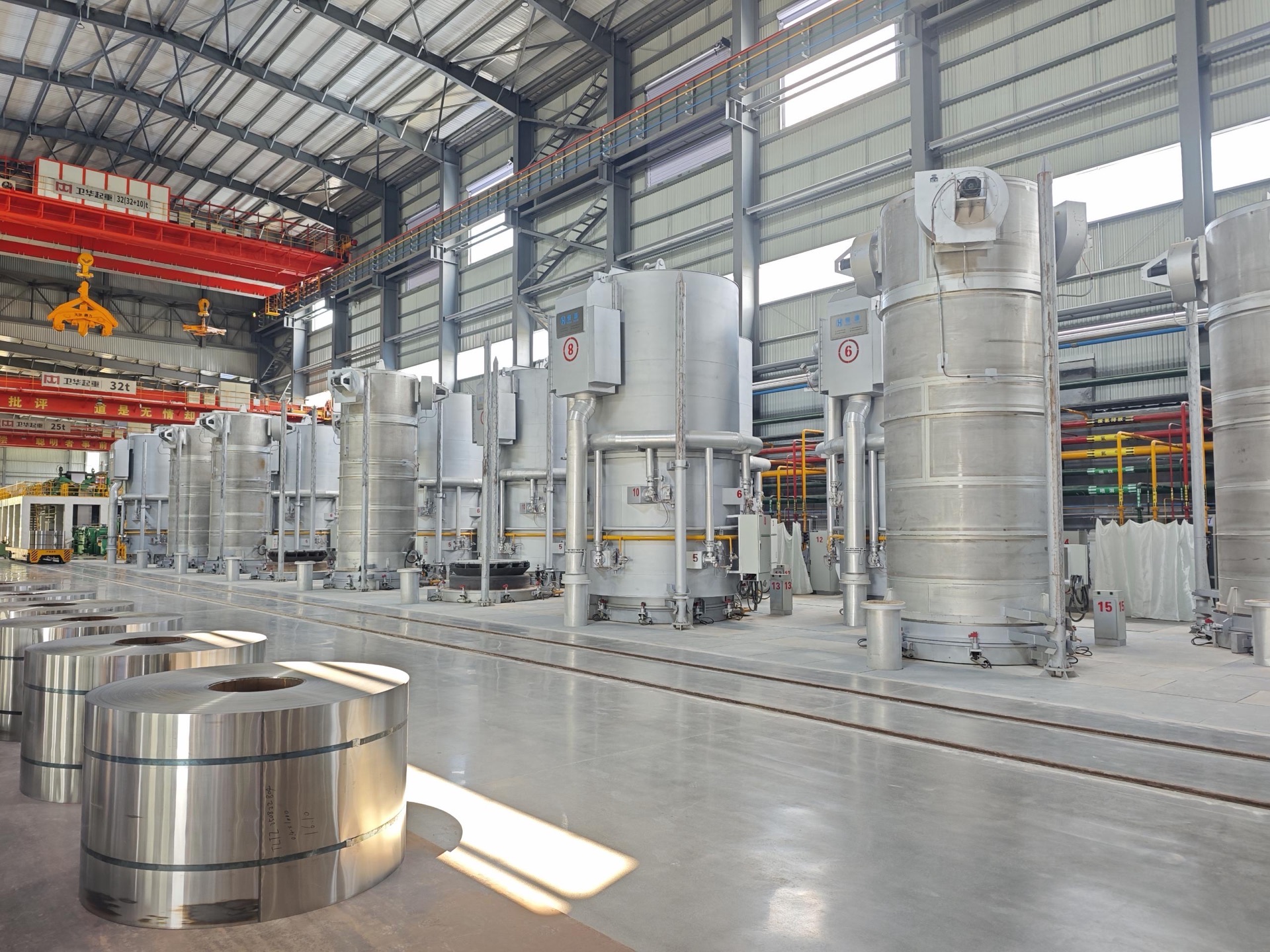
H2 bell furnacehydrogen bell annealerall-hydrogen bell furnace“100% hydrogen” bell annealerstrong-convection hydrogen bell furnace

PROCESS ANIMATION

Bell-furnace process flow and system sequence

The animation illustrates how the furnace base, inner cover, heating hood and related system actions work together. Final configuration and control logic are governed by the agreed project-specific technical proposal.

Applications

Published standards for all-hydrogen bell furnaces cover applications including cold-rolled carbon-steel strip, stainless and alloy strip, wire products, tubes and some nonferrous materials. Suitability for a Hengyuan project must still be confirmed from the alloy, incoming condition, load arrangement, surface requirement and metallurgical result. Not every bell-furnace application requires an all-hydrogen atmosphere.

Engineering focus

  • Load arrangement, circulation path and heat-transfer model
  • Hydrogen purge sequence, gas-quality requirements and safety interlocks
  • Heating, soaking and controlled-cooling cycle
  • Recipe control, process records and interfaces to plant systems

Scope of supply

A project may include furnace bases, inner covers, heating hoods, cooling hoods, atmosphere and purge equipment, automation, handling interfaces and agreed auxiliaries.

RFQ data

Provide the material and grade, coil dimensions and stack, maximum batch mass, target cycle, atmosphere specification, annual or hourly throughput, utilities, site conditions and applicable standards.

01

Applications and project fit

Common procurement terms include H2 bell furnace, all-hydrogen bell annealing furnace and “100% hydrogen” bell annealer. In this context, the term describes the intended protective-atmosphere process; it is not a substitute for specifying the actual working-gas composition, purity, process limits and purge sequence for the project.

Hydrogen bell annealing is used where a controlled batch atmosphere, repeatable thermal cycle and efficient convective heat transfer are required. The furnace configuration is selected around the product and process rather than a fixed catalogue model.

  • Cold-rolled steel coils and strip-coil production
  • Selected copper and copper-alloy coil processes after engineering review
  • Wire coils and other batch loads after load and cycle confirmation
  • New production lines, capacity expansion and selected revamp projects
02

System architecture

The base supports the load and circulation arrangement. The inner cover forms the controlled process enclosure. Heating and cooling hoods manage the thermal cycle, while the gas, purge, control and safety systems coordinate each operating step.

  • Furnace bases and load-support arrangement
  • Inner covers and sealing interfaces
  • Heating hoods, burners or electric heating, and circulation equipment
  • Cooling hoods and any agreed final-cooling arrangement
  • Hydrogen supply, purge, venting, monitoring and safety interlocks
  • PLC/HMI control, recipes, alarms and process-data records
03

Process and atmosphere engineering

Gas purity, dew point, residual oxygen limits, purge criteria and pressure control are project requirements, not assumptions implied by the phrase “all-hydrogen.” They must be agreed against the product, plant gas supply and applicable safety rules.

The heating, soaking and cooling cycle is evaluated together with load geometry, circulation, surface condition and production target. Performance values are confirmed only for a defined configuration and acceptance basis.

04

Information required for selection

  • Material grades, incoming condition and required product result
  • Coil inner/outer diameter, width, individual mass and stacking arrangement
  • Maximum batch mass, cycle target and production throughput
  • Hydrogen specification, purge medium, utilities and site conditions
  • Handling interfaces, plant layout, automation boundary and data interfaces
  • Applicable standards, inspection scope and acceptance criteria
05

Manufacturing and verification

The verification plan is agreed with the technical specification. Depending on scope, it can cover design review, material traceability, welding documentation, dimensional inspection, leak testing, control and interlock checks, trial operation and project acceptance records.

06

Standards and published project evidence

According to China’s National Public Service Platform for Standards, Hengyuan Industrial Furnace (Jingjiang) Co., Ltd. and Jiangyin Hengyuan Industrial Furnace Co., Ltd. are listed among the principal drafting organizations for YB/T 4250—2025.

Published project records on this website describe selected Hengyuan hydrogen bell-furnace systems. Final project scope and acceptance remain governed by the corresponding contracts and records.

PROJECT QUESTIONS

Frequently asked questions

What information is needed to size a hydrogen bell furnace?

Start with the material and grade, coil dimensions and stack, maximum batch mass, required cycle, production throughput, atmosphere specification, utilities, site conditions and applicable standards.

What equipment is normally included in a hydrogen bell annealing system?

A project can include bases, inner covers, heating hoods, cooling hoods, gas and purge equipment, automation, handling interfaces and auxiliaries. The final battery limits are defined in the technical agreement.

What does the inner cover do?

It separates the controlled process atmosphere from the heating environment and forms the enclosure around the load. Its material, geometry, welds and sealing interfaces are selected for the specified duty.

Can an existing bell furnace line be revamped?

Selected revamps can be evaluated after the existing equipment, drawings, process limits, safety system, controls and desired production outcome are reviewed.

How are hydrogen purge and safety interlocks defined?

The sequence is engineered from the plant gas supply, atmosphere criteria, pressure and flow conditions, applicable standards and the agreed operating philosophy. It is then verified against the project acceptance plan.

Can cycle time, capacity or consumption be guaranteed from a website enquiry?

No. Those values require a defined load, process, configuration, utility basis and acceptance method before they can be confirmed in a technical proposal.